
Woodball Career Opportunities in India: 13 Reasons to Explore Beyond Playing the Game
13/10/2026
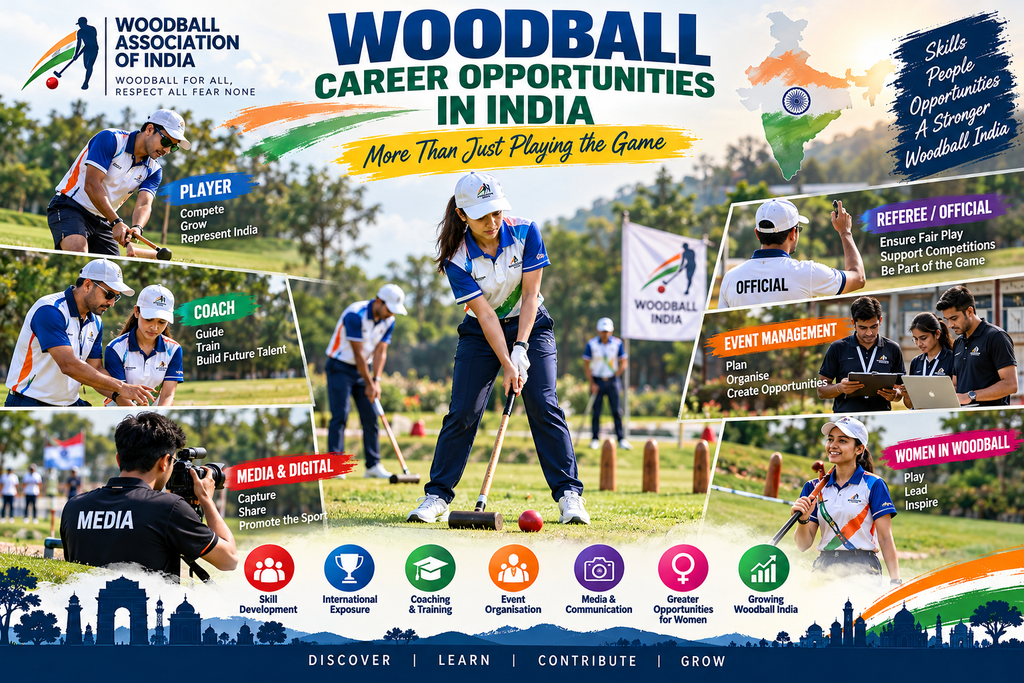
When we think about building a career in sports in India, cricket, football, badminton, and athletics are usually the first names that come to mind. Young athletes spend years training, hoping to represent their state, compete nationally, or perhaps one day wear the Indian jersey.
But what about those who are passionate about sports and want to explore something different?
This is where Woodball in India deserves greater attention. Looking at **Woodball career opportunities in India** means considering not only the people competing on the field, but also those helping the sport grow behind the scenes.
Woodball may not attract the same crowds or commercial sponsorships as India’s most popular sports, but it offers something valuable: an opportunity to become part of a developing sporting community where players, coaches, officials, organisers, and volunteers all have a role to play.
For a student discovering Woodball for the first time, it could become a meaningful sporting interest. For an experienced athlete, it may offer another competitive challenge. And for someone interested in sports management or coaching, it could open the door to practical experience.
The important thing is understanding that a sporting career is not limited to winning medals.
As Woodball continues to develop across India, there is an opportunity to build a wider ecosystem around the sport. Let’s explore the different career pathways, the challenges involved, and how young Indians can begin their journey.
1. Woodball Career Opportunities in India: Why This Growing Sport Matters
India is a country full of sporting talent. From school playgrounds to university campuses and local sports grounds, thousands of young people dream of building a future connected to sports.
However, not every talented student has access to expensive coaching facilities, professional academies, or well-established sporting networks.
Woodball offers a different experience.
The game emphasises accuracy, concentration, control, consistency, and strategic thinking. Although physical fitness is important, performance is not determined by strength or speed alone.
This creates opportunities for individuals with different sporting backgrounds to explore a new challenge.
Someone who has never participated in a major competitive sport may discover an interest in Woodball through a college activity or introductory workshop. An athlete from another discipline may enjoy developing the precision and patience required to improve their performance.
What makes Woodball particularly interesting is that its development requires more than players. It also needs knowledgeable coaches, trained officials, organised competitions, accessible facilities, and people who can introduce the game to new communities.
These supporting roles are essential for any sport to grow.
Of course, it is important to be realistic. Woodball is not currently comparable to India’s largest professional sports in terms of commercial opportunities. Participation does not automatically lead to employment, scholarships, or financial rewards.
Nevertheless, for people genuinely interested in the sport, there are several worthwhile pathways to explore. The most realistic Woodball career opportunities in India begin with building skills, gaining experience, and finding trustworthy programmes to join.
2. How to Become a Competitive Woodball Player in India
For many young athletes, the first ambition is simple: become a better player and compete at a higher level. Among Woodball career opportunities in India, the path of a competitive player is often the most visible, but it also demands patience and steady progress.
Competitive Woodball requires regular practice, technical improvement, patience, and a willingness to learn from mistakes.
A successful stroke may look effortless, but behind that moment are hours of training, adjustments, and repeated practice.
Starting at the grassroots level
An aspiring player can begin by looking for recognised Woodball activities in their district, state, school, college, or university.
Introductory programmes and training camps offer opportunities to learn from experienced participants and better understand the demands of competitive play.
Rather than immediately focusing on national selection, beginners should concentrate on improving their basic techniques, accuracy, shot control, and consistency.
Progressing towards competitive events
As players develop, they can explore opportunities to participate in eligible district, state, university, and national competitions.
The Woodball Association of India (WbAI) provides information about championships, training programmes, and other activities supporting the development of the sport.
For players aspiring to compete internationally, building a consistent performance record and understanding applicable selection requirements are important steps.
Representing India in an international competition is a significant sporting ambition. However, selection depends on the relevant eligibility criteria, selection procedures, performance standards, and decisions of the responsible organisations.
**The best starting point is not asking how quickly you can reach the national team, but how consistently you can improve your performance today.**
That mindset can make a meaningful difference over time.
3. Woodball Coaching Careers in India: Training the Next Generation
Not everyone who contributes to a sport needs to be a competitive athlete.
Coaching is one of the most important Woodball career opportunities in India for people who enjoy teaching, guiding, and motivating others. It is also essential to the long-term development of the sport.
An effective coach does more than explain technique. They observe players, identify areas for improvement, encourage discipline, and help athletes build confidence.
Imagine a student attending their first Woodball training session.
They may struggle to control the mallet, judge the distance, or maintain consistency. An encouraging instructor can make the difference between that student giving up after one session and returning the following week.
Opportunities in Woodball coaching
People interested in coaching may explore roles connected to:
– Introductory Woodball workshops and training programmes
– School and university sports activities
– Community-based training sessions
– Club-level coaching and player development
– Supporting athletes preparing for competitive events
– Assisting experienced coaches during camps and training activities
Aspiring coaches should first develop their technical understanding and practical experience.
Where recognised coaching courses or certification programmes are available, completing the appropriate training can help strengthen professional credibility.
Coaches working with children should also understand safeguarding, first aid, safe training practices, and age-appropriate instruction.
Coaching opportunities may begin as voluntary or part-time responsibilities rather than full-time employment.
Over time, experienced individuals may be able to explore paid coaching arrangements, depending on demand, qualifications, and available programmes.
4. How to Become a Woodball Referee or Technical Official in India
Every successful competition needs people who understand how to manage the sporting environment fairly and professionally.
Referees and technical officials play a vital role in ensuring that events are organised properly and that participants can compete under consistent conditions.
For someone who enjoys sports but does not necessarily want to become a professional player, officiating can be an interesting direction. This is one of the less-publicised Woodball career opportunities in India, and it calls for sound judgement and an ability to stay calm under pressure.
What does a Woodball official contribute?
A trained official may be involved in supervising competitive play, maintaining competition records, supporting event procedures, and helping resolve on-field situations within their assigned responsibilities.
These roles demand concentration, impartiality, sound judgement, and strong communication skills.
A good referee must be confident enough to make decisions while remaining respectful towards players and fellow officials.
How to explore officiating opportunities
Interested individuals can follow official announcements relating to referee training, examinations, workshops, and certification opportunities.
The Woodball Association of India includes referee examinations among its areas of sport-development activity.
Applicants should confirm the current eligibility criteria, course availability, examination requirements, and recognition of any certificate before enrolling.
Officiating can also provide valuable experience for those interested in wider careers in sports administration and competition management.
5. Sports Management and Woodball Event Management Careers in India
Think about everything that happens before a Woodball championship begins.
Someone has to prepare the competition venue, coordinate participants, arrange equipment, create schedules, organise registrations, communicate with teams, and ensure that essential services are available.
These responsibilities are not always visible to spectators, but they are what make sporting events possible.
As Woodball activities develop, event organisation and sports management become important areas of involvement. For students who enjoy planning and teamwork, Woodball career opportunities in India can include gaining hands-on experience in these behind-the-scenes roles.
Possible responsibilities in Woodball events
Sports management students, graduates, and volunteers may explore experience in:
– Tournament planning and scheduling
– Player registration and participant coordination
– Venue and equipment management
– Team communication and event administration
– Volunteer coordination
– Sponsorship proposals and partnership outreach
– Public relations and event promotion
– Results management and documentation
For example, a college student studying business administration or event management might gain practical experience by helping organise an approved university-level Woodball activity.
They could learn how to manage schedules, prepare event documentation, coordinate volunteers, and communicate with different stakeholders.
These are transferable skills that can be useful beyond Woodball, including in other sports, educational institutions, event companies, and community organisations.
**A single well-organised sporting event can be an excellent learning experience for someone beginning a career in sports management.**
6. Woodball Sports Media, Photography and Digital Marketing Opportunities
Today, the success of a sporting event is not measured only by what happens on the playing field.
How effectively the event reaches the public also matters.
A memorable photograph, a well-edited video, a player interview, or an informative article can help introduce Woodball to people who have never seen the sport before.
This creates opportunities for individuals with creative and digital skills. In fact, Woodball career opportunities in India extend to the photographers, writers, designers, and communicators who help more people discover the sport.
Building Woodball’s digital presence
Graphic designers, photographers, videographers, writers, and social media enthusiasts can contribute by creating:
– Championship posters and event announcements
– Player interviews and athlete profiles
– Match highlights and short videos
– Training camp photography
– Educational Woodball content
– Tournament reports and sports articles
– Social media campaigns
– Website updates and event coverage
These activities help make athletes more visible and encourage greater public interest.
For a young creative professional, documenting a Woodball event could also become a useful portfolio project.
The key is to create accurate, respectful, and engaging content that genuinely represents the players and the sport.
While paid media roles in Woodball may be limited, practical experience gained through authorised sporting activities can support broader careers in digital marketing, journalism, photography, and sports communication.
7. Woodball Career Opportunities for Women in India
Creating meaningful opportunities for women is essential to the long-term development of any sport.
In India, access to sports can vary considerably depending on location, financial resources, family support, availability of facilities, and social expectations.
These challenges need to be recognised rather than ignored.
Woodball offers an opportunity to encourage greater participation by women and girls through well-organised programmes, accessible coaching, and supportive sporting environments.
Female players can pursue competitive participation, while women interested in sports leadership may explore coaching, officiating, event management, and administrative responsibilities. Making Woodball career opportunities in India more accessible to women means opening doors both on and off the field.
Why female participation matters
When young girls see women participating confidently in sporting activities, it becomes easier for them to imagine themselves doing the same.
Visible female coaches and officials can also encourage families to support participation.
However, genuine inclusion requires more than promotional messages.
It requires safe facilities, appropriate scheduling, accessible training opportunities, transparent selection procedures, and respectful treatment.
By addressing these practical issues, Woodball organisations, educational institutions, and local communities can help make participation more welcoming.
Supporting women’s involvement strengthens the sporting environment for everyone.
8. Growing Woodball Opportunities in Rural India and Smaller Cities
Some of India’s most determined athletes come from places where sporting infrastructure and professional exposure are limited.
Talented young people in smaller towns may have the enthusiasm to compete but struggle to find suitable coaching, equipment, or organised competitions.
Woodball could become part of efforts to expand sporting participation beyond major cities. For Woodball career opportunities in India to reach more people, training and organised activities also need to be accessible outside large urban centres.
Its focus on accuracy and skill makes it an interesting option for community-based programmes.
However, accessibility should not be confused with having no infrastructure requirements.
Woodball still needs suitable playing space, maintained equipment, trained supervision, and safe arrangements for participants.
How local communities can support Woodball
District sports groups, colleges, community organisations, and interested institutions can begin by identifying whether recognised Woodball activities already exist nearby.
Where suitable facilities and instructors are available, introductory demonstrations or supervised practice sessions may help generate interest.
A realistic grassroots programme could start with a small group of enthusiastic participants rather than an expensive event.
As interest develops, organisers can explore regular training sessions, local partnerships, and opportunities to connect with established Woodball associations.
This gradual approach is often more sustainable than organising one large event without a long-term participation plan.
The goal should be simple: allow interested people to experience the sport and decide whether they want to continue.
9. Woodball Career Development for School and University Students
Educational institutions can provide an important starting point for people interested in sports.
Students often discover their abilities through activities they initially joined out of curiosity.
One student may enjoy the competitive side of Woodball. Another may discover that they are good at organising events. Someone else may become interested in coaching or sports photography.
These experiences can help students explore interests outside their academic subjects. Exposure to Woodball career opportunities in India may also help them discover whether they enjoy coaching, managing events, or working directly with athletes.
Universities and colleges can contribute through student sports clubs, introductory workshops, supervised training, and participation in eligible competitions.
They can also create opportunities for students studying physical education, sports science, management, or media to gain relevant experience.
The World Health Organization recognises the importance of regular physical activity for young people’s physical and mental well-being.
While participation in Woodball alone does not guarantee particular health or academic outcomes, it can be one enjoyable component of an active lifestyle.
For students balancing studies with sporting ambitions, realistic schedules and supportive teachers are especially important.
The aim should be to make sports part of a balanced education, not to make students feel that they must choose between academic progress and physical activity.
10. How to Start Your Woodball Career in India: A Step-by-Step Guide
If you are interested in Woodball but have never participated before, the first steps do not need to be complicated.
A practical approach is to begin by learning what opportunities are available in your area. If you are exploring Woodball career opportunities in India, start with reliable contacts and real training experiences instead of promises of quick success.
Step 1: Find reliable information
Visit the official Woodball Association of India website and look for information about affiliated associations, recognised activities, workshops, championships, and training opportunities.
You can also enquire with your school, college, university, or local sports organisations.
Step 2: Attend a supervised introductory session
Where available, join an introductory workshop or training session.
This is a useful way to understand the physical and technical demands of the sport before making a bigger commitment.
Step 3: Practise consistently
Improvement comes through repetition and thoughtful practice.
Instead of focusing only on powerful strokes, pay attention to accuracy, balance, distance control, and consistency.
Ask experienced coaches for feedback and use it to guide your training.
Step 4: Decide what interests you most
You may enjoy competing, but you may also discover an interest in teaching others, officiating, organising events, or creating sports content.
Exploring these different roles can help you identify a direction suited to your strengths.
Step 5: Build experience gradually
Participate in legitimate opportunities that match your ability and eligibility.
Maintain records of relevant training, participation, qualifications, and event experience.
For those seeking professional roles, a clear record of skills and responsibilities can be useful when approaching sports organisations or potential employers.
Step 6: Keep learning
Sports continue to evolve, and there is always something new to learn.
A player can improve their technique. A coach can develop better teaching methods. An event organiser can learn to manage competitions more efficiently.
Consistent development is more valuable than expecting instant success.
11. Can You Earn Money Through Woodball in India?
This is an important question, particularly for students thinking about a future in sports.
The realistic answer is that earning opportunities may exist, but they are not guaranteed. Woodball career opportunities in India should therefore be evaluated on actual openings, qualifications, and compensation—not on the assumption that participating in a tournament will lead to a paid job.
Unlike commercially established sports, Woodball has a smaller professional employment market in India.
Some individuals may find opportunities connected to coaching, event services, media production, sports administration, or training activities. However, payment depends on the organisation, project, responsibilities, experience, and available funding.
Winning a tournament should not be assumed to guarantee prize money, a government job, sponsorship, or scholarship benefits.
Athletes should always verify whether a specific competition or certificate is recognised by the institution or scheme from which they hope to receive benefits.
Before paying for a training programme or travelling to a tournament, it is sensible to check the full cost, refund terms, eligibility requirements, and organiser details.
For most beginners, Woodball is better approached as a sporting interest and a chance to develop useful experience, with professional opportunities evaluated carefully as they arise.
A sustainable career is built on skills, credibility, relationships, and consistent work—not promises of immediate financial success.
12. Role of the Woodball Association of India (WbAI) in Career Development
For a developing sport, strong organisational support is important.
The **Woodball Association of India (WbAI)** works towards promoting Woodball and developing participation through championships, training camps, workshops, referee-related activities, and international sporting opportunities.
These activities contribute to the broader environment in which athletes and other sports professionals can gain experience. Information about recognised events and training programmes can also help people navigate Woodball career opportunities in India more confidently.
However, the long-term growth of Woodball also depends on local initiative.
Coaches need interested students. Competitions need committed organisers. Players need opportunities to practise. Sports associations need cooperation from educational institutions and communities.
No single organisation can build a sporting culture alone.
A stronger future for Woodball in India will require collaboration among players, schools, universities, state associations, coaches, officials, volunteers, and supporters.
When these groups work together, the sport has a better foundation for sustainable development.
13. Future of Woodball Career Opportunities in India
The future of any developing sport is difficult to predict.
Greater participation does not automatically guarantee professional leagues, large sponsorship deals, or a substantial employment market.
But there are practical reasons to remain interested in Woodball’s potential.
Training programmes can introduce new players. University competitions can create meaningful sporting experiences. Better communication can improve public awareness. Well-organised championships can help build trust among participants.
Each of these developments contributes something valuable.
For Indian athletes, the opportunity is not simply to wait for the sport to become popular.
It is to participate thoughtfully in its development.
A dedicated player can set an example through discipline and performance. A coach can introduce young people to the sport. An official can support fair competition. A photographer can capture moments that inspire others.
These contributions may appear small individually, but together they help create a stronger sporting community.
Frequently Asked Questions About Woodball Careers in India
Is Woodball a good career option in India?
Woodball career opportunities in India can include competitive participation, coaching, officiating, event management, and sports media. These can provide valuable experience, but paid roles are limited compared with more established sports, so individuals should assess openings realistically.
How can I become a Woodball player in India?
You can begin by contacting relevant Woodball associations or educational institutions, attending recognised introductory programmes, and practising under appropriate guidance. As your skills develop, explore competitions for which you meet the eligibility requirements.
Can I become a Woodball coach in India?
Individuals interested in coaching should develop technical knowledge, gain practical experience, and seek appropriate coaching education or recognised certification where available. Requirements depend on the organisation and level of coaching.
Are there international Woodball competitions for Indian players?
Yes. International Woodball competitions are organised in different countries, and Indian players have participated in international events. Participation and team selection depend on the requirements and procedures applicable to each competition.
Can students benefit from playing Woodball?
Students can develop sporting skills, concentration, patience, and teamwork through well-organised Woodball activities. It can also provide opportunities to explore competitive sports, event management, and other practical interests.
Where can I find official Woodball updates in India?
Visit the official Woodball Association of India website at **woodballindia.com** for information about competitions, training activities, association announcements, and relevant opportunities.
Conclusion: Building a Future Beyond the Playing Field
Every sport needs champions, but it also needs people who teach, organise, encourage, communicate, and create opportunities for others. That wider support network is what gives Woodball career opportunities in India meaning beyond the competition itself.
That is what makes the future of Woodball in India an interesting subject.
For young athletes, Woodball offers a chance to discover a different sporting challenge. For students, it can become a source of learning and confidence. For coaches, officials, and sports professionals, it provides opportunities to contribute their knowledge and experience.
The journey may not always be easy, and professional opportunities will take time to develop. But meaningful progress often begins with something simple: a person willing to try, a coach willing to teach, or a community willing to support a new activity.
**Woodball career opportunities in India are about more than medals or employment. They are also about developing skills, building connections, and contributing to a sporting community that future generations can be proud of.**
If you are interested in exploring Woodball, stay connected with the **Woodball Association of India (WbAI)** and follow official announcements about training programmes, championships, and participation opportunities.
**Woodball for All, Respect All, Fear None.**
Leave a Reply